
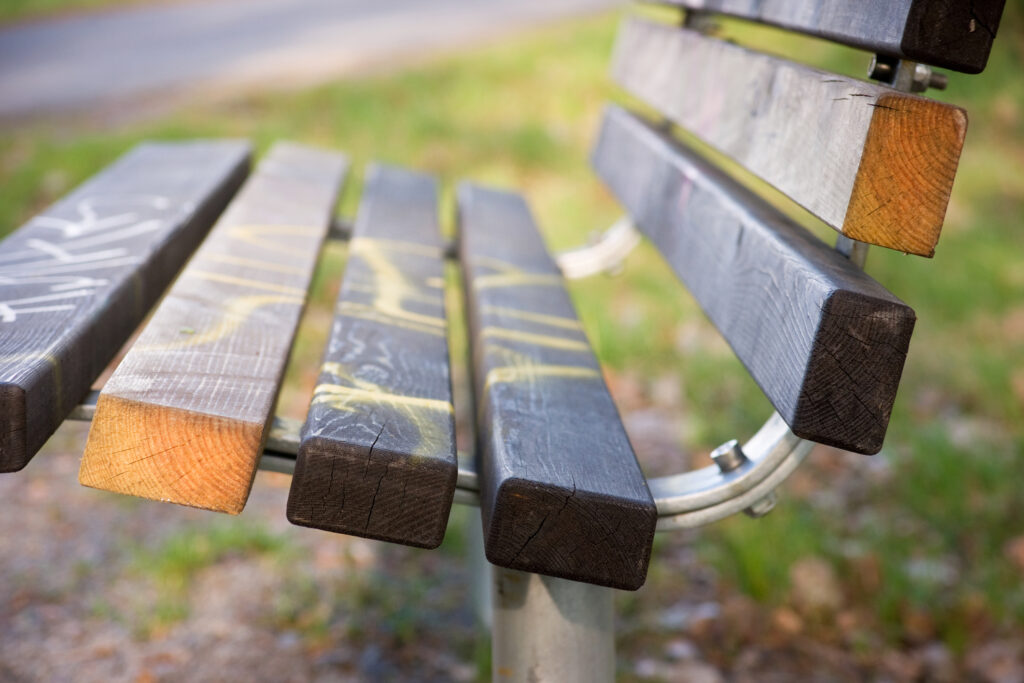
Public spaces shape how communities connect, relax, and move through their cities. Yet, vandalism remains a constant challenge, particularly for street furniture, which is designed to enhance functionality and liveability. Acts such as graffiti, damage to fixtures, or the misuse of amenities affect not only the physical environment but also the wellbeing of residents. From park furniture to bus shelters and commercial outdoor benches, vandalism takes a toll on safety, costs, and community pride.
This guide explores the impacts of vandalism on urban infrastructure and offers practical tips for councils and communities to reduce it.
What Does Vandalism Look Like in Public Spaces?
Vandalism can take many forms, ranging from minor to severe. For councils, it’s important to recognise the common ways street furniture is targeted, including:
- Graffiti and tagging – spray paint or permanent markers defacing surfaces.
- Physical damage – broken street and park benches, shattered glass on bus shelters, or bent bicycle racks.
- Fire and burn marks – scorched rubbish bins or picnic tables.
- Misuse – improper use of shelters, signage, or fencing that causes wear and tear.
Each of these actions reduces the quality of public areas and often results in expensive repairs or replacements, particularly for custom streetscape furniture.
The Impact on Communities and Councils
Vandalism doesn’t just harm objects; it has a ripple effect across the entire community. Councils face higher costs in repairing and replacing damaged street and park furniture, diverting resources away from other essential services. Residents lose trust in their local spaces when they appear unsafe, unattractive, or neglected.
In many cases, vandalism also reduces accessibility. For instance, a damaged bus shelter may leave commuters without weather protection, while broken urban furniture such as benches or picnic settings discourages people from enjoying parks. Over time, neglected damage can create a cycle where communities feel disconnected from their spaces, further reducing care and respect for public assets.
Key Strategies for Reducing Vandalism
While it’s impossible to eliminate vandalism entirely, councils and communities can take proactive steps to reduce it significantly.
1. Choose Vandal-Resistant Materials
Durable materials like powder-coated steel, reinforced timber, and composite surfaces are harder to damage and easier to clean. This makes commercial outdoor benches and other fixtures more resistant to graffiti and physical damage.
2. Prioritise Regular Maintenance
A proactive maintenance schedule helps identify issues early. Quick responses to vandalism discourage repeat behaviour by showing the community that spaces are cared for. Councils that quickly repaint graffiti or repair damaged furniture send a clear message that vandalism won’t be tolerated.
3. Increase Visibility and Lighting
Well-lit and visible areas deter vandalism, especially at night. Installing lighting near streetscape furniture and pathways improves both safety and oversight.
4. Encourage Community Involvement
Communities that feel connected to their spaces are less likely to vandalise them. Encouraging residents to report issues or even take part in “adopt-a-space” programs helps foster ownership and pride.
5. Smart Design and Placement
Strategically placing urban furniture in high-traffic areas where it can be monitored reduces opportunities for vandalism. Similarly, thoughtful design elements, such as textured finishes that resist spray paint, can make a difference.
The Role of Communities in Preserving Public Assets
Councils alone can’t tackle vandalism. Community members play a key role in preserving their urban environments by respecting shared resources and reporting damage promptly. Education campaigns in schools, youth programs, and community events can also build awareness about the costs and consequences of vandalism.
When people take pride in their spaces, streetscape furniture becomes more than just urban infrastructure — it becomes part of their identity and daily life.
Protecting Our Public Spaces Together
Vandalism is a challenge, but it doesn’t have to define the way communities experience their public areas. Through durable design, regular upkeep, and community engagement, councils can minimise the impact of vandalism on street furniture and create safe, welcoming environments. From commercial outdoor benches to shelters and signage, every piece of infrastructure plays a role in shaping liveable cities. By working together, councils and residents can protect their park furniture, extend the lifespan of public assets, and ensure that urban spaces remain vibrant, functional, and respected for years to come.