
Running a business is busy enough without having to worry about which bin the broken printer goes into. But getting your workplace recycling right is brilliant for the environment and absolutely great for your bottom line. According to the most recent Australian National Waste Report, the country generates tens of millions of tonnes of waste each year, making commercial waste management a critical priority for local companies. Whether you are setting up new bins in the breakroom or overhauling your entire sustainability policy, using reliable commercial recycling services takes the headache out of the process. If you operate locally, navigating waste management in Brisbane requires knowing exactly what you can and cannot recycle, ensuring your team is on the same page.
Tackling paper, cardboard, and confidential documents
Most modern offices still generate a surprising amount of paper. Standard office paper and cardboard boxes are highly recyclable and should always have dedicated bins placed near desks and printing stations. It is crucial to flatten cardboard boxes to save space and ensure paper is not contaminated by food or coffee spills.
However, handling sensitive client or staff information requires a completely different approach. You can’t simply toss financial records or employee details into the standard blue recycling bin. Using secure document destruction ensures you meet strict Australian privacy regulations. Many businesses rely on locked security consoles where staff can safely deposit confidential documents before they are professionally shredded and recycled into new paper products.
Making sense of workplace plastics
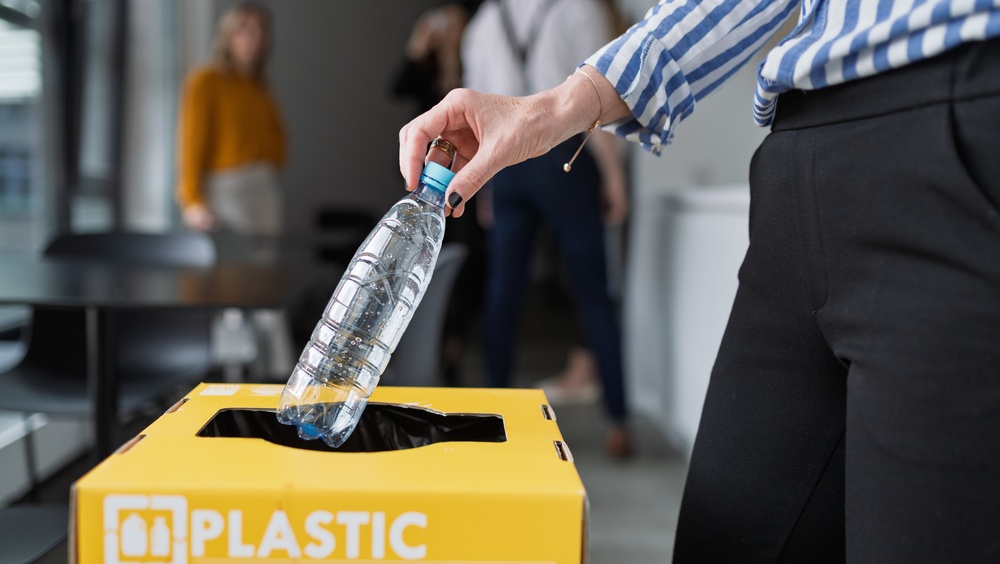
Plastics are notoriously confusing for staff, often leading to a common mistake known as wish-cycling, where people throw non-recyclable items into the recycling bin hoping for the best. In a standard staff kitchen or warehouse, you will likely find PET, which includes your typical clear water bottles, and HDPE, commonly used for milk jugs and sturdy cleaning product containers. Both are widely accepted in standard recycling streams.
Then there is LDPE, often found in soft plastic wrapping around pallet deliveries, and PP, which is frequently used for takeaway containers and yogurt tubs. Getting staff to separate these polymers correctly prevents mass contamination. Partnering with expert commercial recycling services ensures these specific materials actually make it to a designated processing facility rather than ending up in a local landfill. Providing clear, colour-coded signage above your bins is the most practical way to boost your team’s accuracy.
Dealing with old tech and solar panels
Electronic waste is growing at an alarming rate globally. Old tech, from dead laptops and broken monitors to outdated server racks, contains valuable recoverable materials like copper and gold, alongside hazardous heavy metals such as lead and mercury. You should never dump electronic waste in a general waste bin.
Furthermore, as more businesses transition to renewable energy to cut electricity costs, disposing of decommissioned solar panels is becoming a pressing issue across Australia. Specialised recycling facilities are now equipped to recover silicon, glass, and aluminium from these panels. Keeping these items out of standard bins protects the local environment and feeds valuable resources back into the manufacturing industry.
The role of mobile services and compliance
Sometimes, dragging heavy items to a loading dock just isn’t feasible for a busy team. This is where mobile services step in, coming directly to your commercial site to collect bulky e-waste, excess pallets, or secure documents. It is a highly practical solution that saves your staff time and prevents workplace injuries.
But it isn’t just about convenience; it is heavily tied to compliance. Environmental Protection Authority guidelines require businesses to dispose of regulated and hazardous materials responsibly. Good commercial waste management means ensuring your waste removal providers are fully licensed and compliant with local environmental laws.
The chain of responsibility means your business can be held accountable if your waste is disposed of illegally by a third party. When tackling waste management in Brisbane, businesses must ensure they hold the right documentation and waste tracking certificates, particularly for restricted or hazardous materials.
Future-proofing your commercial waste management and commercial recycling services
Getting your materials sorted might feel a bit overwhelming at first, but taking small, practical steps makes a massive difference over time. From safely shredding confidential files to correctly separating your PET and HDPE plastics, every positive action counts. Effective commercial waste management keeps your business compliant, reduces your environmental footprint, and often lowers your overall disposal costs. By investing in proper commercial recycling services, you show your staff, stakeholders, and customers that you genuinely care about the future. Great waste management in Brisbane is much easier when you have a clear plan, the right bins in place, and a solid understanding of how to handle your everyday materials.