
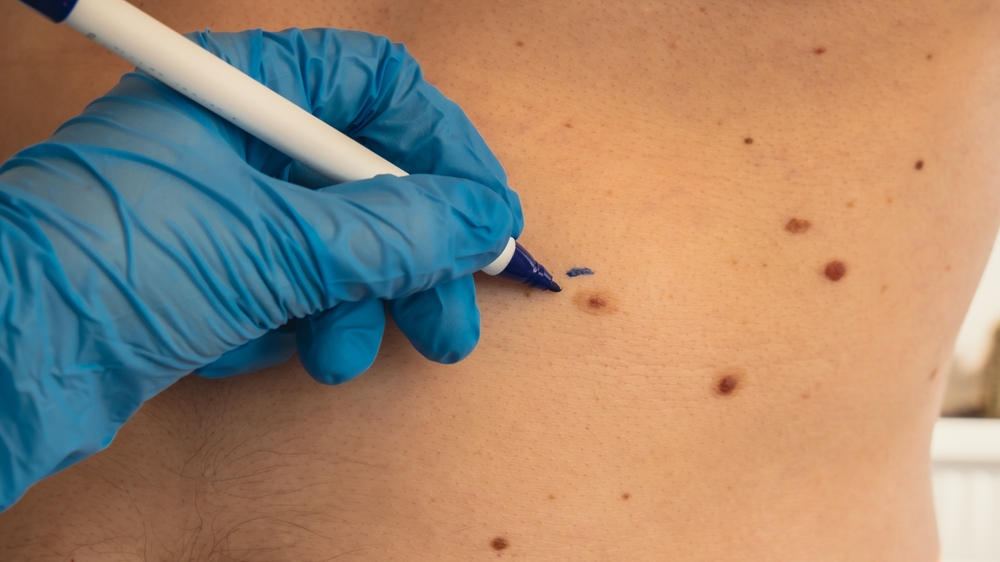
It’s not uncommon to find a lump, bump or mole that wasn’t there before. In many cases, these lesions are harmless. But how do you know when it’s time to consider skin lesion removal? Whether you’ve spotted a fleshy skin tag, a mole that’s changed colour, or a lesion that keeps bleeding, knowing when to see a colorectal surgeon for assessment and skin tag removal could save you unnecessary worry or something more serious.
Here are the common signs that a skin lesion may need removal, the difference between benign and suspicious lesions, and when to seek medical advice.
What Is a Skin Lesion?
A skin lesion is any area of the skin that looks different from the surrounding tissue. It may be raised, flat, pigmented, ulcerated or bleeding. Lesions can include moles, warts, cysts, skin tags or more concerning growths like basal cell carcinomas or melanomas. Some appear gradually, while others show up quite suddenly.
While many lesions are benign, it’s always worth getting a professional opinion if something looks or feels off.
Types of Common Benign Lesions
Some of the most common benign skin lesions include:
- Seborrhoeic keratoses. These are waxy, wart-like growths often seen in older adults.
- Lipomas. These are soft, fatty lumps that grow under the skin.
- Skin tags. These are small, soft, flesh-coloured growths that commonly appear in skin folds.
Benign lesions usually don’t hurt, itch, bleed or change quickly. They often stay the same size and shape for years. However, benign does not always mean you should leave them alone. Skin tag removal may be recommended if they are irritating, catch on clothing, or are cosmetically bothersome.
Signs a Lesion Might Be Suspicious
Here are some signs that a lesion may need further assessment:
- Rapid changes in size, shape or colour
- Irregular borders with jagged or uneven edges
- Multiple colours, including black, blue, red or white in one lesion
- Itching, bleeding or crusting
- New lesions appearing after the age of 40
Australia has one of the highest rates of skin cancer in the world. Early detection is critical, especially for melanoma. If you notice any of these signs, it’s time to book an appointment.
Who Should You See?
While many people think of dermatologists for skin issues, a colorectal surgeon also plays a key role in treating lesions in sensitive or private areas. This includes the anus, groin and lower abdomen. These areas are prone to skin tags, warts, cysts and other growths that may need removal or biopsy.
A colorectal surgeon is trained to assess and safely remove lesions in these locations. If anything appears unusual, they can arrange for further treatment or testing.
What Does Skin Lesion Removal Involve?
The removal process depends on the lesion’s type, size and location. Most benign lesions can be treated during a quick in-clinic procedure using local anaesthetic. Common techniques include:
- Shave excision to remove the lesion from the surface of the skin
- Elliptical excision for deeper lesions or those needing full removal for pathology
- Cautery or cryotherapy for treating superficial growths
Skin tag removal is usually simple and does not require stitches. Suspicious lesions are typically sent to pathology for testing.
Why Early Action Helps
Many people delay seeing a specialist due to embarrassment or uncertainty. But early removal of skin lesions, especially in sensitive areas, can prevent discomfort, reduce infection risk and provide peace of mind.
Even harmless lesions can become irritated or infected, particularly in areas that sweat or rub. If you are unsure whether a lesion is harmless or not, a colorectal surgeon can give you clear advice and a personalised plan.
Think You Need Skin Tag Removal? Here’s What to Do Next
Skin lesion removal is a safe and effective way to deal with growths that are uncomfortable, at risk of infection or potentially cancerous. Skin tag removal is also straightforward, especially when the tags cause irritation or appear in visible areas. A colorectal surgeon can help assess and treat lesions in delicate areas, ensuring you receive expert care and an accurate diagnosis. If you have noticed a lesion that has changed, grown or feels unusual, don’t delay. Getting advice early on can make all the difference.