


To reduce afternoon glare in coastal living rooms without blocking ocean views, combine exterior automated shading to stop solar heat before it hits the glass with layered interior translucent fabrics that diffuse harsh light while preserving outward visibility. Living near Port Phillip Bay or along the Mornington Peninsula brings an unbeatable lifestyle, especially when your home captures sweeping water views. Yet anyone who owns a west-facing lounge knows the afternoon sun can quickly turn a peaceful space into an uncomfortable greenhouse. Finding custom-made or automated window treatment ideas for living room areas becomes essential when you want to protect your furniture and eyes without shutting out the coast. Pairing indoor custom sheer curtains with exterior alfresco awnings lets you filter harsh rays that hurt eyes and damage fabrics while keeping that prized ocean vista wide open.
Why is the western sun so severe in coastal homes?
Western sun sits low on the horizon between 3 pm and sunset, depending on the season, firing direct rays straight through wide-span glass doors while reflecting off the water to double visual glare.
In Melbourne, where intense summer afternoon sun often follows a cool morning, managing this solar radiation is essential for everyday comfort, keeping room temperatures down without straining air conditioning. It also helps protect upholstery, rugs, art, and wooden flooring from getting sun-bleached. Standard blockout blinds solve the brightness problem, sure, but pulling them down completely sacrifices the very view you bought the house for. A layered shading strategy solves both problems simultaneously.
How can you stop heat and glare before it hits the window glass?
Exterior shading outperforms internal coverings for thermal control because it intercepts solar energy outside the building envelope before it warms your window glass.
Installing automated alfresco awnings over your patio or balcony creates an instant shade canopy that cuts heat transfer and interior glare dramatically. Research from UNSW in Sydney showed that external shading cut hot indoor hours (above 30°C) by up to 50%. So, during a 40°C Melbourne heatwave, effective exterior shading typically keeps unconditioned indoor spaces 5°C to 10°C cooler than unshaded rooms. And in homes with a cooling system, you can cut summer cooling energy consumption by an impressive 25% to 45%.
Modern folding-arm awnings or straight-drop outdoor screens use high-tensile architectural mesh that blocks UV rays while letting cooling bay breezes flow through. Because the weave remains semi-transparent from the inside, you can still watch the boats on the water while keeping your living room significantly cooler.
How do translucent fabrics soften indoor glare?
You may be thinking that blockout curtains would then be the best bet. But translucent indoor window coverings diffuse remaining harsh daylight into an even, gentle glow while maintaining clear daytime sightlines to the coast.
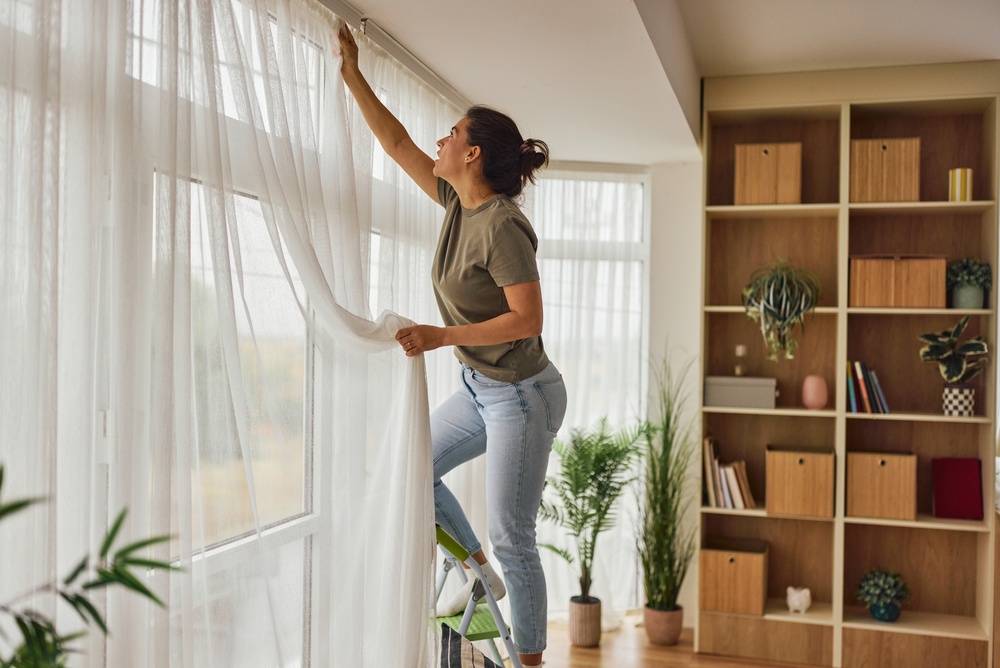
Once you’ve tamed the worst of the external heat, indoor layers add visual warmth and precision light control. Hanging floor-to-ceiling custom sheer curtains softens bright reflections without making the room feel closed in, while giving you daytime privacy from neighbouring properties or coastal walking paths.
For maximum control across changing seasons, layer your window treatments using this setup:
- Outer layer: Automated exterior screens or awnings. These can be controlled remotely with your mobile, or you can set a schedule that automatically adjusts through the day.
- Middle layer: Concealed motorised sunscreen roller blinds (with a slight level of translucency) that drop halfway to shield low winter sun while leaving the lower horizon open.
- Inner layer: Ceiling-recessed sheer drapery to diffuse light and soften hard architectural glass lines.
What should you avoid?
The biggest mistakes in coastal window design are specifying non-marine-grade hardware that corrodes in salt air and choosing dark interior sheer fabrics that absorb heat and darken the room.
Coastal environments are tough on mechanisms, so standard indoor brackets rarely survive outdoors. Always specify marine-grade stainless steel components and automated wind sensors for exterior shading so awnings retract safely when a sudden southerly squall rolls off the bay.
Inside the room, avoid dark-coloured sheer fabrics. While dark mesh works brilliantly for outdoor sunscreen blinds by absorbing glare and improving outward visibility, dark sheer curtains inside make a coastal lounge feel heavy. Stick to soft whites, warm oatmeal, lighter shades of colours you like, or pale stone tones indoors to keep the space airy and reflective.
Enjoy your view every day with window treatment ideas for living room comfort
Creating a comfortable coastal lounge doesn’t mean choosing between scorching glare and a closed-off room. By combining weather-resistant alfresco awnings outside with flowing custom sheer curtains inside, you gain complete control over harsh afternoon light and summer heat. Exploring tailored window treatment ideas for living room spaces ensures you enjoy uninterrupted coastal views and relaxed comfort all year round.