
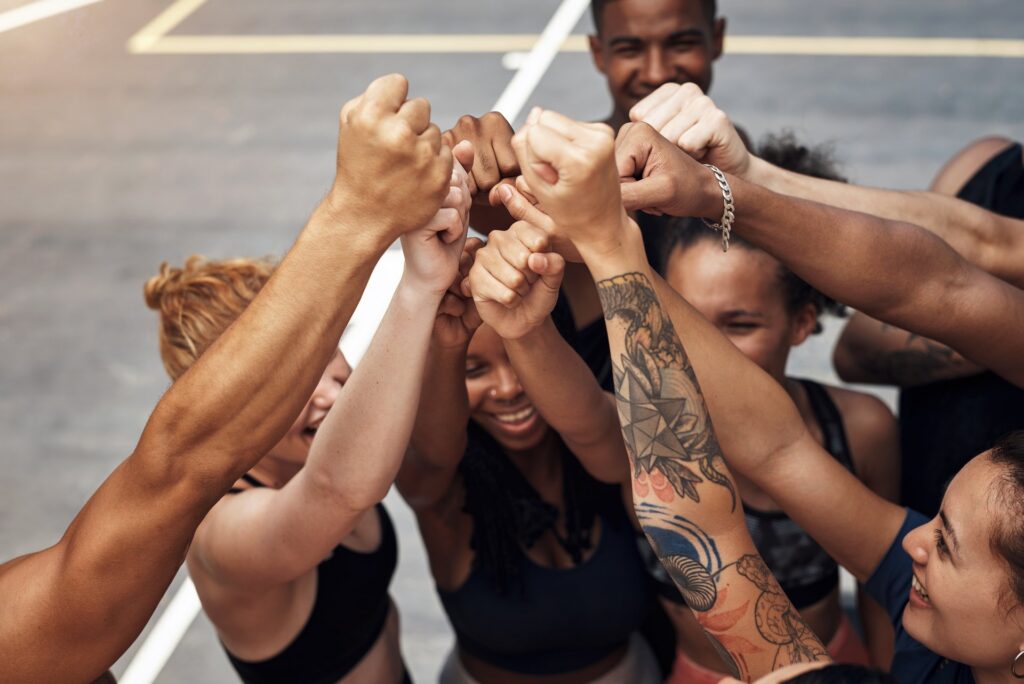
There is something powerful about turning up to the same oval, court, pool or trail every week and seeing familiar faces. No filters. No curated highlight reel. Just real people moving their bodies together.
Community sport offers more than fitness. It provides structure, identity, shared struggle and shared wins. In a time when many adults report rising stress, loneliness and emotional fatigue, those elements matter.
Research shows that regular physical activity reduces symptoms of anxiety and depression. When that activity happens in a social setting, the mental health benefits increase further. Adults who participate in organised sport report higher life satisfaction and lower psychological distress than those who exercise alone.
The reasons are practical and human. Community sport creates routine. It builds connection. It gives adults a reason to show up even when motivation dips.
Why Adult Mental Health Needs Community
Modern adult life often looks full from the outside but feels thin underneath. Work dominates the week. Screens fill the gaps. Many friendships shrink into group chats.
Loneliness has become a public health concern in Australia and globally. Even people surrounded by colleagues and family can feel socially disconnected. That disconnection affects mood, sleep and resilience.
Community sport offers a counterweight. It provides a shared goal. It reduces social barriers because the focus sits on the activity. You do not have to perform socially. You simply play.
For men in particular, structured group activity can replace conversations they might otherwise avoid. Research shows that men often bond side by side rather than face to face. Local footy clubs, cycling groups and basketball teams create that environment naturally. In many ways, regular sport fills the gap described in discussions about the importance of spending time with other men in real life, where shared activity makes emotional support easier.
For women, community sport can interrupt the constant mental load. Many women describe feeling drained by invisible responsibilities. Regular physical activity in a group setting becomes a protected hour. It also addresses the deeper fatigue explored in conversations about what feeling tired all the time can signal about modern womanhood. Movement with others shifts the nervous system. It builds energy rather than draining it.
The Science Behind It
Exercise increases endorphins and dopamine. It improves sleep quality and reduces stress hormones. Those effects alone support better mood.
But community sport adds two more factors that research identifies as critical for adult wellbeing.
First, social belonging. Studies from the University of Queensland and other institutions show that group identification improves resilience. When adults feel they belong to a team or club, they report greater purpose and improved coping during stress.
Second, accountability. A solo gym plan often fades. A team expecting you on Wednesday night feels different. That consistency strengthens both physical and mental health outcomes.
Even outdoor sport carries added benefits. Time spent in natural settings improves mood and lowers rumination. The concept often referred to as nature’s prescription encourages adults to spend consistent time outdoors each week. Team sports in parks, coastal rowing clubs, hiking groups and cycling communities deliver both social and environmental benefits in one session.
The Role of Third Spaces
Community sport functions as what sociologists call a third space. Home is the first space. Work is the second. Third spaces sit somewhere in between. They offer belonging without obligation.
Local sport fits this definition well. You are not there to earn money or manage household tasks. You are there to move and connect.
This return to local classes, clubs and social hubs reflects a broader shift toward neighbourhood engagement. The renewed importance of local activities as third spaces has reshaped how adults connect. Sport plays a central role in that movement.
It also explains why suburban infrastructure matters. Parks, courts, bike paths and well-designed public seating areas create accessible meeting points. Urban planners increasingly recognise how community friendly streetscape design influences physical activity and social cohesion.
When sport happens close to home, it becomes sustainable. Adults are more likely to attend sessions when travel time stays manageable. That proximity reduces friction and builds long term consistency.
Identity and Purpose
One often overlooked mental health benefit of community sport is identity.
Adults move through phases where roles shift. Careers change. Children grow up. Relationships evolve. A local club can offer stable identity during those transitions.
You might be a business owner during the day. On Tuesday night, you are the goalkeeper. That shift matters.
Small business owners in particular face high stress levels. Financial pressure, responsibility for staff and long working hours affect wellbeing. Research into small business owner wellbeing highlights elevated anxiety compared to the general population. Structured sport provides a release valve. It separates work stress from personal time in a clear and physical way.
Purpose also grows from improvement. Learning a new skill or regaining fitness builds competence. Competence increases self-efficacy. That confidence often transfers into other areas of life.
For adults who struggle with body image or self-perception, sport can reshape the narrative. Focusing on strength, stamina or teamwork shifts attention from appearance to function. Exercise has been shown to reduce symptoms of body dysmorphia by redirecting focus toward capability rather than aesthetics.
Mental Health in Men and Women
Community sport benefits both men and women, though the drivers may differ.
For many men, can sport provide a socially acceptable way to express emotion. Frustration, joy and disappointment are visible and shared. It can also create space for deeper conversations that grow gradually over seasons. Discussions around communication and emotional intelligence in men often highlight the need for safe environments where vulnerability feels normal. Clubs and teams often become those environments over time.
For women, group sport can restore autonomy. Many adult women prioritise caregiving and work responsibilities above their own needs. A scheduled match or class becomes non-negotiable. It builds boundaries in a healthy way.
Both genders benefit from reduced screen time. Replacing scrolling with structured physical activity changes daily rhythm. Several people have described meaningful improvements in mood after intentionally putting their phones down and choosing real world engagement instead.
The Outdoor Advantage
Not all community sport takes place on traditional fields. Hiking groups, bouldering clubs, rowing communities and fishing circles offer similar benefits.
In Melbourne, for example, indoor climbing gyms have grown into strong social hubs. Many adults join not only for the physical challenge but for the community. Shared problem solving on climbing routes fosters conversation and camaraderie.
Outdoor hiking groups offer both exercise and scenery. Trails such as popular day hikes near Melbourne or early morning climbs in the Perth Hills create shared accomplishment without formal competition. These environments feel less intimidating for adults returning to fitness after a long break.
Fishing groups provide a slower rhythm. Time by water encourages reflection. Many participants describe improved mental clarity after regular outings. Research into outdoor recreation supports these anecdotal experiences, linking time near water with lower stress markers.
Even recreational activities such as go karting leagues or cycling groups create structured social outlets. The key lies in repetition. One off events help, but ongoing participation builds identity and belonging.
Building Mental Grit Through Sport
Resilience grows through manageable challenge. Community sport offers that challenge in contained form.
You lose matches. You improve skills. You learn to regulate nerves before competition. These experiences build mental grit.
Parents often worry about how to cultivate resilience in children. The same principle applies to adults. Sport provides safe exposure to setbacks and recovery. Adults who continue participating later in life maintain that training ground for adaptability.
Consistency also reinforces routine. When adults commit to regular activity, they practice discipline. That discipline supports broader mental health stability.
Practical Ways to Start
Many adults hesitate to join community sport because they feel out of shape or socially rusty. That hesitation is common. It is also manageable.
Start local. Choose a club or group within easy reach. Familiar surroundings reduce anxiety.
Begin with low barrier activities. Social tennis leagues, mixed netball, beginner running groups and hiking collectives often welcome newcomers warmly.
Attend consistently for at least six weeks. Research on habit formation shows that repetition over time strengthens commitment. Do not judge the experience based on one session.
Talk to at least one person each time. Connection grows gradually. Shared activity often makes conversation easier.
If traditional team sport feels intimidating, try alternative community movement. Bouldering gyms, cycling groups, fishing circles or organised day hikes offer similar social benefits with less competitive pressure.
When Sport Alone Is Not Enough
Community sport supports mental health. It does not replace professional care when needed.
Adults experiencing persistent low mood, anxiety or burnout should consider speaking with a GP or psychologist. Sport can complement therapy, but it rarely is a good substitute for it.
Clubs also play a role in promoting mental health literacy. Many now partner with organisations that provide mental health training to coaches and captains. These initiatives help participants recognise signs of distress and encourage help seeking.
Why It Matters in 2026 and Beyond
As work patterns change and remote employment increases, informal daily social contact declines. Adults no longer chat by default in shared offices. Community sport can replace some of that lost incidental connection.
Suburbs that invest in accessible facilities see stronger social cohesion. Well maintained courts, walking trails and clubhouses are not luxuries. They are mental health infrastructure.
Participation also builds intergenerational bridges. Adults who continue playing sport model active lifestyles for children. Shared community spaces foster observation and learning.
The long term benefit extends beyond individual wellbeing. Strong local clubs reduce isolation, strengthen neighbourhood identity and improve collective resilience during difficult periods.
A Simple but Powerful Commitment
You do not need elite skill. You do not need perfect fitness. You need a time, a place and a group.
Commit to one evening a week. Or one Saturday morning. Protect it.
Community fitness and sport groups offer structure in a fragmented world. It builds connection in a distracted culture. It strengthens both body and mind through shared effort.
Adult mental health improves when life contains movement, meaning and other people. Community sport delivers all three, close to home, week after week.
And sometimes, that is enough to make a big change!