
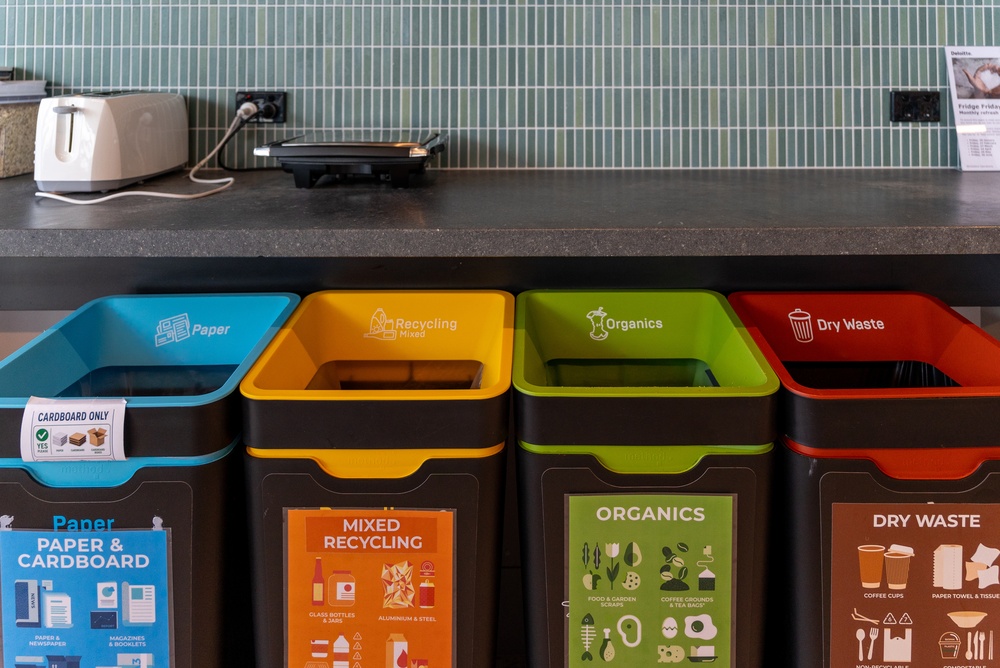
For organisations across Brisbane and Queensland, waste costs can be difficult to untangle. The state waste levy is charged to landfill operators in designated levy areas, and its cost may be reflected in disposal charges. That means reducing the amount of material sent to landfill can help manage costs, although savings depend on your waste volumes, collection arrangements and commercial waste recycling provider fees. The right commercial recycling services and suitable commercial bin hire can help separate recoverable materials from general waste without making daily operations harder.
Queensland’s waste levy isn’t a separate charge that every business necessarily pays directly. How it appears on an invoice depends on the site, service and contract. Check your provider’s itemised charges and ask how disposal, transport and levy costs are calculated before changing your collection plan.
Start with a waste audit
A useful waste plan begins with evidence, not guesswork. For a week or two, note what goes into each bin, how quickly it fills and whether collections leave bins partly empty. A simple visual check can reveal that cardboard is taking up space in general waste, or that food scraps are adding weight. For larger, multi-site, or more complex operations, a professional waste audit to identify recycling streams is highly recommended.
Record the type of material, approximate volume, collection frequency and any contamination issues. Keep the review practical and safe: don’t ask staff to sort through hazardous, sharp or unknown waste. For regulated or sensitive materials, follow relevant handling requirements and get advice from a qualified provider.
This baseline helps identify whether the main opportunity is better separation, a different bin size, fewer collections or a combination. It also makes it easier to compare service proposals on like-for-like terms.
Match separation to the industry
Different workplaces produce different waste, so a single setup won’t suit every site.
Hospitality and food businesses
Keep food scraps separate from packaging and general waste where an appropriate organics service is available. Separate clean cardboard, glass and eligible containers according to the provider’s accepted-materials list. A common mistake is to put liquids or food-contaminated packaging into recycling, which can affect the whole load.
Retail and distribution
Flatten cardboard and keep it dry. Set aside reusable pallets and check whether shrink wrap or other packaging can be collected separately. If cartons are bulky but light, a dedicated recycling stream may free up space in the general waste bin.
Offices and professional services
Provide clearly labelled central recycling points for paper, cardboard and accepted containers. Keep confidential documents in secure destruction services and arrange separate collection for e-waste rather than placing devices in ordinary bins.
Construction and maintenance
Separate clean timber, metal, concrete, soil and packaging where the project’s waste arrangements allow. Confirm acceptance rules before ordering bins: mixed loads, treated materials and contaminated soil may need different handling.
Healthcare, education and community facilities
Make sorting straightforward for staff, contractors and visitors, while keeping clinical, hazardous or confidential waste out of general recycling. Use clear signs at the point of disposal and review them when services or accepted materials change.
The aim isn’t to create a bin for every material. Start with the largest clean, recoverable streams that your commercial waste recycling provider can actually collect and process.
Make the system easy to use
Place the right bins near where waste is produced. In a café, that may mean separate containers at the food preparation area; in a warehouse, clearly marked collection points near packing stations. Signs should name accepted items and show common exclusions. A brief staff induction is often more useful than a long policy that nobody reads.
Assign someone to check bin areas regularly. If recycling is repeatedly contaminated, look for the cause before blaming staff: the labels may be unclear, the bin may be in the wrong place, or the service may not accept an item people assume is recyclable.
Review bins, collections and invoices
Ask your provider which materials are accepted, what happens to them after collection, and how contamination or rejected loads are handled. Compare the full service cost, not just the advertised bin price. Collection frequency, transport, disposal charges and contract conditions can all affect the monthly bill.
Choosing commercial bin hire to match actual volumes can help avoid paying for collections of partly empty bins, while undersized bins can lead to overflow or extra pickups. Review fill levels for several weeks after any change, then adjust the bin size or schedule with your provider.
Keep in mind that recycling doesn’t automatically cost less, although leading companies do offer revenue sharing or cost offsets for waste recovery. Some streams may need dedicated containers or additional collections, and savings vary by location, material quality and contract. Track invoices and landfill volumes to see whether a change is working.
Reduce Queensland waste disposal and landfill costs with a practical plan
A well-run waste system starts with a simple audit from your commercial waste recycling provider, separates valuable materials where services exist, and gives people clear instructions. For different industries, commercial recycling services can support recovery of suitable materials, while suitable commercial bin hire can align collections with real site needs. Review results and invoices over time, because costs and acceptance rules vary. With a practical setup, bin hire and commercial recycling services can help reduce landfill disposal and make waste management more predictable.