
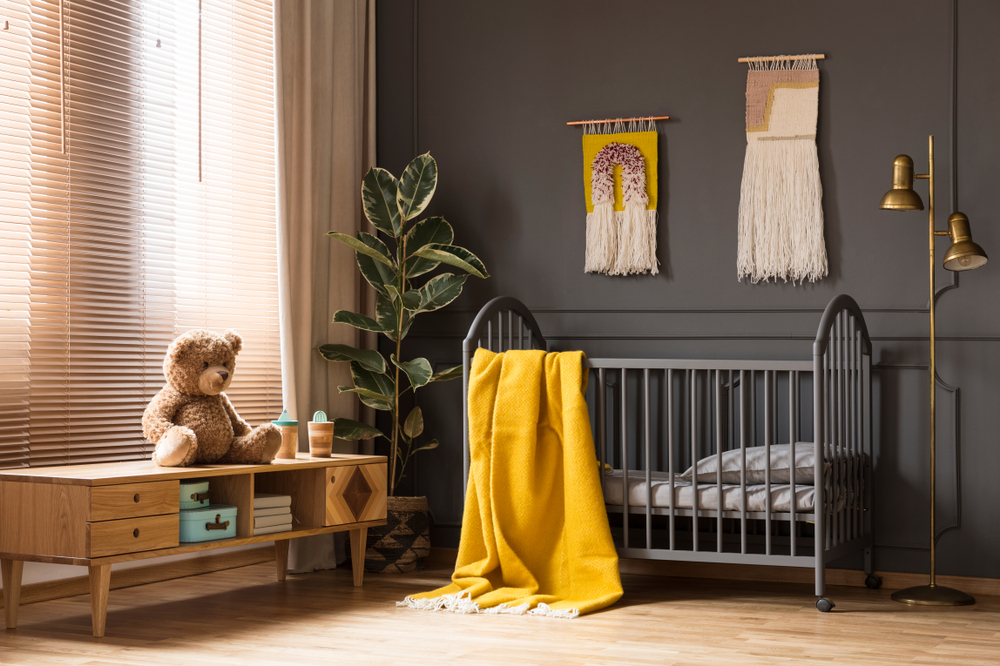
Anyone who’s tiptoed out of a nursery at 6am, only to hear crying or a chirpy “Mum!” or “Dad!” 30 seconds later, knows that light is a real parenting challenge. Morning sun creeping around a blind can end a sleep-in before it starts. That’s why so many Australian families look at custom lined curtains, floor to ceiling curtains and professional curtain installation services when they set up a child’s room. Getting the darkness right, safely, makes a genuine difference to how everyone sleeps! You can also use this free curtain visualiser to get an idea of how your curtains will look!
What “True Blockout” Actually Means
Blockout fabric and a blockout room aren’t the same thing. A fabric can stop nearly all light from passing through it and still leave a room glowing, because light sneaks in at the edges, the top and the bottom. True blockout curtains are about a whole system: dense fabric, a high-quality lining, generous length and width, and a design that closes the gaps.
Lining does more than darken. Tests by Australian and international efficiency bodies show that well-fitted, lined window coverings can cut heat loss through windows by around 40-60%, which matters in a nursery where parents don’t want a room to overheat or to run heating all night. Lined fabric also softens noise from the street, and it protects the face fabric from fading, so the room still looks lovely in five years.
Eliminating Light Gaps
This is where most room designs need a few practical fixes that work well:
- Side channels or wraparound tracks that curve back to the wall, stopping the “halo” down each edge.
- Double-track systems, with a sheer on the front track for daytime and a blockout on the back, so the room can be bright and playful by day and cave-dark by night.
- Pelmets or ceiling-mounted tracks to stop light spilling over the top, which is the single biggest leak in most rooms.
- Extra width, roughly 2 to 2.5 times the window width, so the fabric stays dense when drawn.
- Floor to ceiling curtains that run past the sill and puddle slightly, sealing the bottom edge where low winter sun angles in.
Floor to ceiling curtains also make small bedrooms feel taller, which is a nice bonus in a compact nursery. Combining a blockout roller blind behind custom lined curtains gets very close to total darkness for children who wake at first light.
Blue Light, Body Clocks and Realistic Expectations
Light is the strongest signal for a child’s body clock. Research has shown that bright light in the hour before bed suppresses melatonin in preschoolers, sometimes by more than 80%, and delays sleep onset. Toddlers are more sensitive to evening light than adults, which explains why a bright bathroom or a tablet screen can undo a careful bedtime routine.
Darkness helps, but it isn’t magic. Studies on sleep environments suggest dark rooms improve sleep onset and reduce early waking, especially in summer when the sun rises before 6am. They don’t fix teething, illness, or an overtired toddler. Parents get the best results by pairing a dark room with warm, dim lighting in the evening, screens off an hour before bed, and a consistent wind-down.
Choosing Custom Lined Curtains and Curtain Installation Services for Better Sleep
A child’s room rewards thoughtful planning. Custom lined curtains handle the darkness and the temperature, floor to ceiling curtains close the gaps and lift the space, and experienced curtain installation services who make sure every cord and track meets safety rules. Together they create a calm, safe room where sleep comes a little easier for everyone.