
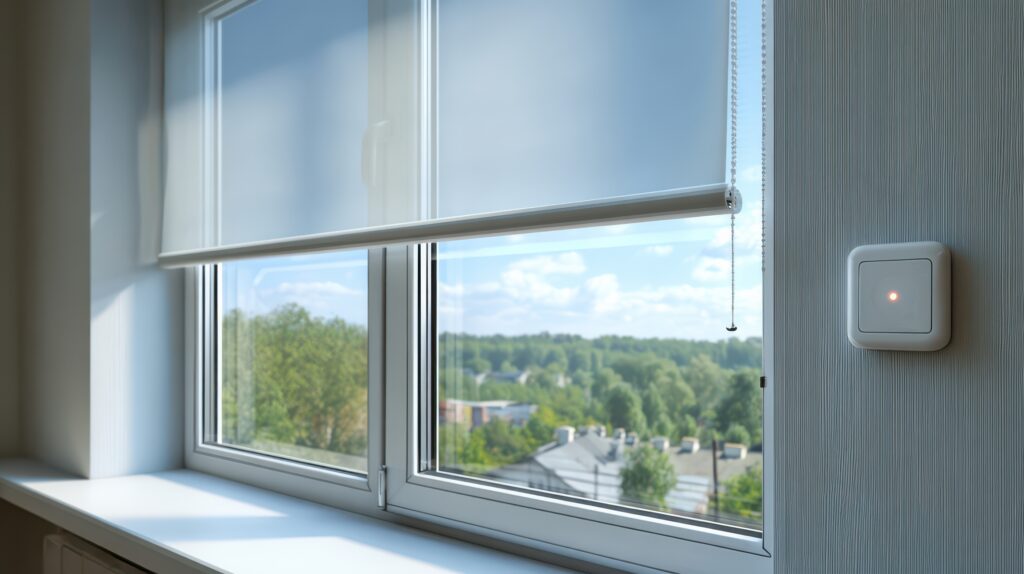
Rising energy costs continue to place pressure on commercial buildings across Melbourne, especially offices, healthcare facilities, schools, and hospitality venues. Smart window systems have become one of the most practical ways to control heat gain, reduce cooling demand, and improve overall comfort. When combined with professional blind and curtain installation services, these systems help maintain consistent indoor temperatures and reduce reliance on artificial lighting. Many commercial spaces now integrate motorised blinds in Melbourne that property managers rely on to automate daily shading. Motorised curtain tracks extend this functionality by improving control, timing, and long-term performance across large sites.
Studies from the Australian Building Codes Board highlight that glazing contributes the majority of unwanted heat during summer. Smart shading reduces this burden by limiting solar heat gain, controlling glare, and regulating natural light. The result is a more stable indoor environment and lower HVAC consumption throughout the day.
Smart window systems can include automated blinds, external shading, responsive fabrics, and integrated building controls. These solutions are increasingly popular across commercial, government, institutional, and multi-residential projects, where energy savings and operational efficiency matter as much as appearance and long-term durability.
How Smart Shading Lowers Energy Use
Effective control of solar heat gain is the cornerstone of any energy-efficient commercial building. When blinds and curtains respond automatically to sun position and temperature, cooling loads decrease significantly. Systems such as motorised blinds in Melbourne businesses used daily allow scheduled shading without manual adjustment, reducing peak energy consumption during warm periods.
Daylighting control is another important factor. Many commercial spaces unnecessarily depend on artificial lighting even when natural light is available. Smart shading systems balance this by filtering daylight while preventing discomfort and overheating. With careful specification and blind and curtain installation services to ensure a precise fit, these systems optimise light levels in meeting rooms, open-plan offices, classrooms, and healthcare settings.
Automated operation through motorised curtain tracks adds another advantage. These systems maintain consistent shading and reduce user error, which is common in large buildings where manual control leads to uneven temperature distribution and unnecessary energy use.
External Shading for Large-Scale Buildings
External shading stops heat before it enters the building, making it one of the most effective tools for improving energy performance. Mesh screens, Zipscreen systems, awnings, and automated exterior blinds offer strong protection and reduce strain on cooling systems. Retail, hospitality, and public buildings benefit from these installations, as they improve both comfort and façade performance.
Paired internal and external systems create the strongest results. When both layers work together, indoor temperatures remain more stable across all levels of a building. This is especially important for multi-storey developments, institutional buildings, and facilities operating extended hours.
Building Integration and Automated Control
Smart window systems achieve maximum efficiency when integrated with building management systems. Automation can respond to sensors, time of day, and occupancy, ensuring blinds close during extreme heat or open when natural light is beneficial. These functions improve lighting efficiency, reduce cooling and heating fluctuations, and support compliance with energy performance requirements.
Centralised control is especially valuable for large commercial buildings. Automated blinds and motorised curtain tracks allow consistent shading across dozens or hundreds of windows, improving performance and reducing maintenance costs. With modern systems, facilities teams can manage window treatments through remote platforms or pre-set scheduling.
Choosing the Right Fabrics and Systems
Fabric selection plays a major role in energy performance. Screen fabrics allow controlled daylight while blocking UV rays. Blockout options create temperature stability for areas requiring privacy or audiovisual control. Fire-rated and sanitised fabrics support the needs of healthcare, hospitality, and educational settings.
Leading blind and curtain installation services ensure these materials are used to their full potential. Careful planning, professional measurement, and reliable installation are essential for achieving the airtight fit and precise movement that energy-efficient buildings require. Motorised blinds in Melbourne facility managers choose for long-term use are tested for durability, quiet performance, and smooth integration with automation platforms.
Smarter Shading for Lower Energy Costs with Professional Motorised Blind and Curtain Installation Services
Smart window systems give commercial buildings an accessible way to improve comfort while lowering operational expenses. Through coordinated planning and blind and curtain installation services, property owners can achieve measurable reductions in cooling and lighting demand. Automated shading through motorised blinds in Melbourne helps businesses stabilise indoor temperatures and keep energy use predictable. Motorised curtain tracks further strengthen these outcomes by supporting consistent performance throughout the day. When designed and installed correctly, automated curtains and blinds make commercial buildings more efficient, more comfortable, and far more cost-effective to operate.